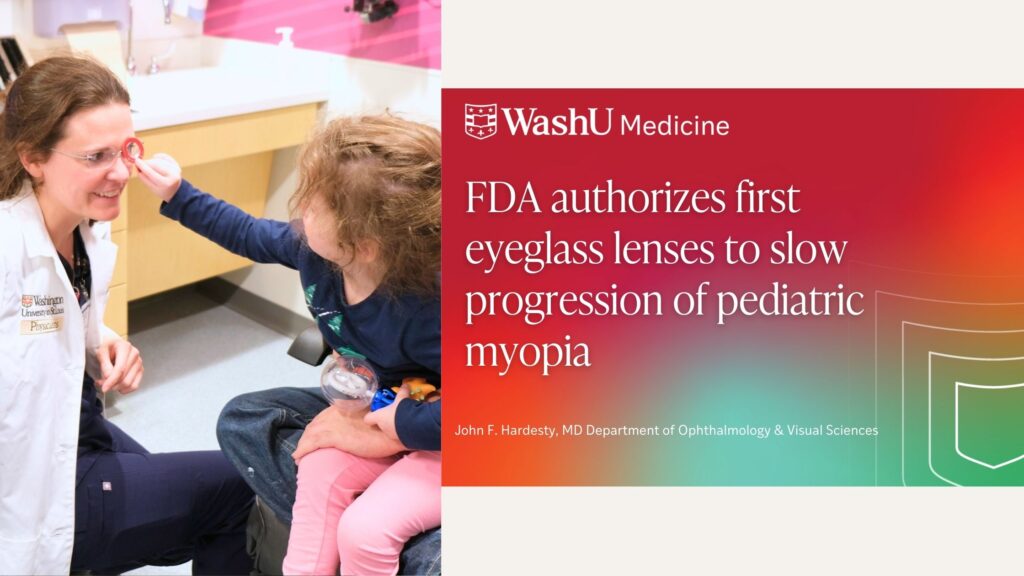
New Stellest lenses offer an FDA-approved option to help manage childhood nearsightedness
The U.S. Food and Drug Administration (FDA) has authorized marketing of the Essilor Stellest eyeglass lenses—the first spectacle lenses in the United States approved to slow the progression of myopia in children ages 6–12. The decision marks an important milestone for families seeking evidence-based options to support long-term eye health in children.
The authorization is based on clinical studies showing that Stellest lenses significantly reduce the rate of myopia progression and eye elongation compared with traditional single-vision lenses. This optical design—featuring a central clear zone surrounded by peripheral “lenslets”—creates a targeted defocus pattern shown to slow axial length growth, the underlying driver of worsening nearsightedness.
Pediatric myopia has become increasingly common in the U.S. and worldwide, and earlier onset is associated with higher risk for future sight-threatening complications, including retinal detachment, glaucoma, and myopic macular degeneration. The FDA’s authorization provides clinicians and families with a new, nonsurgical, contact-lens-free intervention at a time when demand for effective myopia management is growing.
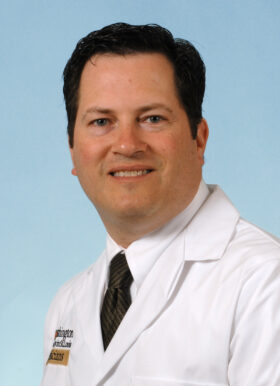
Mark Rallo, OD
Instructor, Ophthalmology and Visual Sciences; Director of Pediatric Optometry
- Email: rallo@nospam.wustl.edu
Mark Rallo, OD, pediatric optometrist with the WashU Medicine John F. Hardesty, MD Department of Ophthalmology & Visual Sciences, shared why this approval is meaningful for children and parents:
“We are very excited to hear about the recent FDA approval of Stellest lenses. Progressive myopia is a real concern among pediatric ophthalmologists and optometrists. Not only does progressive myopia impact a child’s vision, it can also increase their risk for pathologic conditions such as retinal detachment and glaucoma. The younger we diagnose and address the issue, the better the outcome.”
Mark Rallo, OD
“Unfortunately, the use of specialty contact lenses or daily eye drops is not always practical in younger patients. To have another treatment option in our arsenal is encouraging. These specialty lenses can certainly be a stand-alone treatment, but there is the option of combining therapies—such as diluted atropine therapy or increased outdoor activities—as well. We have knowledgeable parents who come into our clinic seeking myopia control, so I am certain they will be aware of this new treatment and wish to learn more.”
The availability of an FDA-approved spectacle option is especially valuable for younger children who may not tolerate contact lenses or daily eye-drop regimens. Stellest lenses add flexibility to treatment planning and may be used alone or in combination with other strategies, such as increased outdoor time or low-dose atropine therapy.
The WashU Medicine Ophthalmology pediatric team will continue evaluating the new lenses as part of its comprehensive myopia management program to help families access safe, evidence-based care.
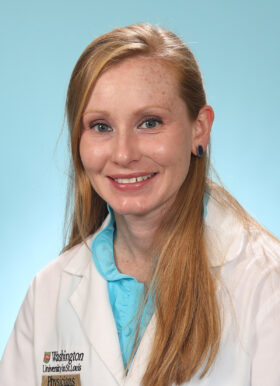
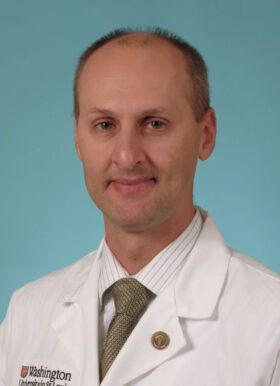
Gabriel Burton, OD
Pediatric Optometrist, Ophthalmology and Visual Sciences
- Email: burtong@wustl.edu
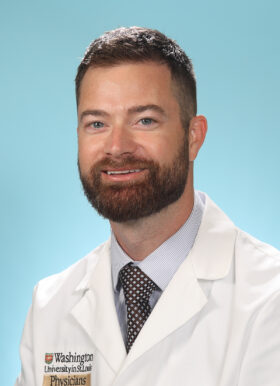
James Hoekel, OD, FAAO
Assistant Professor, Ophthalmology and Visual Sciences
- Email: hoekel@wustl.edu

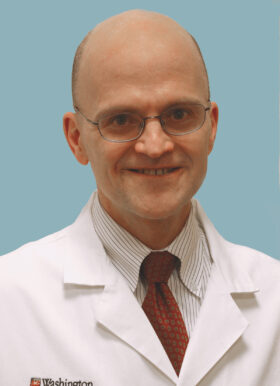
Andrew R Lee, MD
Associate Professor, Ophthalmology and Visual Sciences; Chief, Pediatric Ophthalmology; Director, Medical Student Education for Ophthalmology
- Email: arlee@wustl.edu
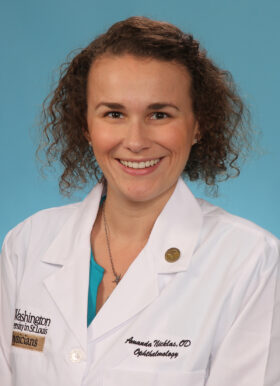
Amanda Nicklas, OD
Pediatric Optometrist, Ophthalmology and Visual Sciences
- Email: nicklasa@wustl.edu
Mark Rallo, OD
Instructor, Ophthalmology and Visual Sciences; Director of Pediatric Optometry
- Email: rallo@wustl.edu
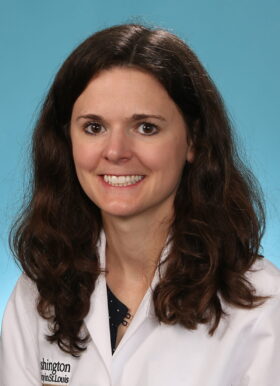
Bethany Rosenthal, OD
Pediatric Optometrist, Ophthalmology and Visual Sciences
- Email: brosenthal@wustl.edu


Lawrence Tychsen, MD
John F. Hardesty, MD, Distinguished Professor of Ophthalmology and Visual Sciences; Professor, Neurobiology; Professor, Ophthalmology in Pediatrics, Dept of Pediatrics
About WashU Medicine
WashU Medicine is a global leader in academic medicine, including biomedical research, patient care and educational programs with 2,900 faculty. Its National Institutes of Health (NIH) research funding portfolio is the second largest among U.S. medical schools and has grown 56% in the last seven years. Together with institutional investment, WashU Medicine commits well over $1 billion annually to basic and clinical research innovation and training. Its faculty practice is consistently within the top five in the country, with more than 1,900 faculty physicians practicing at 130 locations and who are also the medical staffs of Barnes-Jewish and St. Louis Children’s hospitals of BJC HealthCare. WashU Medicine has a storied history in MD/PhD training, recently dedicated $100 million to scholarships and curriculum renewal for its medical students, and is home to top-notch training programs in every medical subspecialty as well as physical therapy, occupational therapy, and audiology and communications sciences.