
Researchers from the WashU Medicine John F. Hardesty, MD Department of Ophthalmology & Visual Sciences and Apte Lab, led by former graduate student Jason Colasanti and senior laboratory supervisor, Andrea Santeford, have identified a promising new approach that could improve treatment for patients with wet age-related macular degeneration (AMD), one of the leading causes of vision loss in older adults. Their findings were recently published in the Proceedings of the National Academy of Sciences (PNAS). The study identifies a molecular pathway that promotes abnormal blood vessel growth independently of VEGF, the primary target of today’s standard treatments.

Current therapies for wet AMD work by blocking vascular endothelial growth factor A (VEGFa), a protein that stimulates the growth of abnormal blood vessels beneath the retina. While these medications have transformed care for millions of patients, they often require frequent eye injections and may become less effective over time for some individuals.
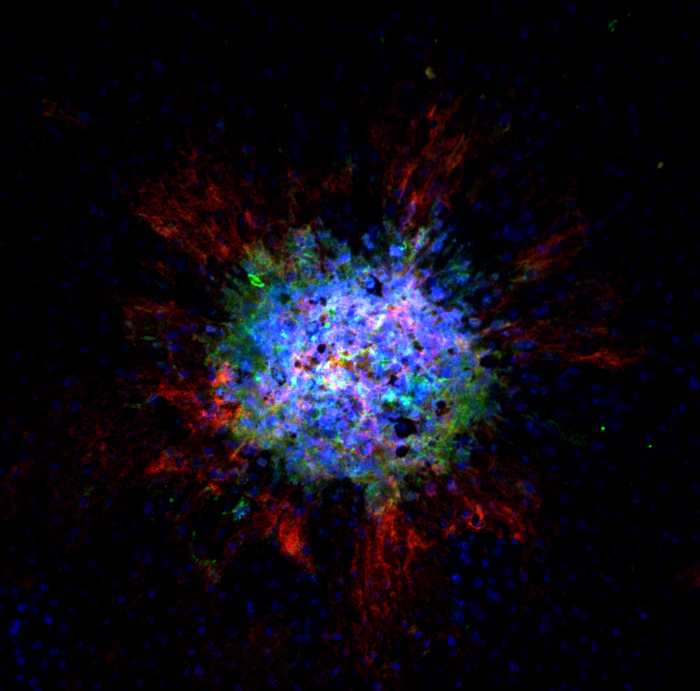
The research team discovered that a small regulatory molecule known as microRNA-34a (miR-34a) promotes the growth of these abnormal blood vessels through a pathway that does not rely on VEGFa. Instead, miR-34a suppresses the protective protein KLF2, activating the CXCR4/CXCL12 signaling pathway, which drives pathological blood vessel growth associated with wet AMD. These findings suggest that targeting miR-34a and its downstream signaling partners could complement existing anti-VEGFa therapies and potentially improve long-term outcomes for patients.
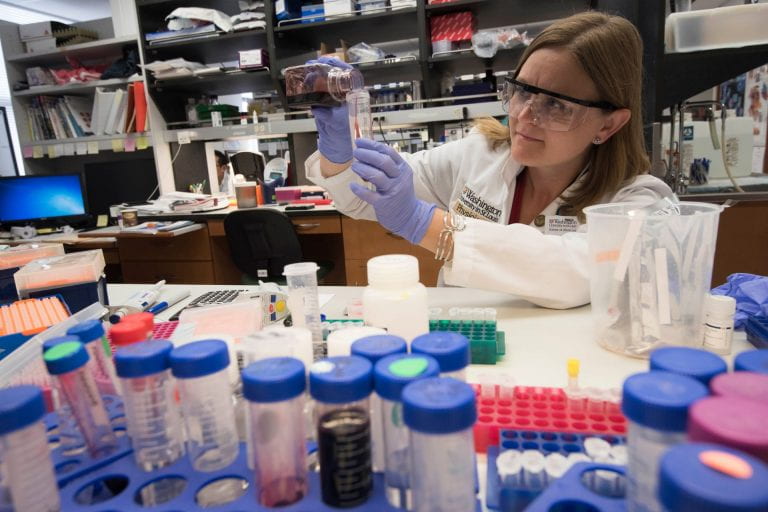
Andrea Santeford, senior laboratory supervisor in the Apte Lab and an author of the study, said the research highlights new possibilities for treating wet AMD.
“While anti-VEGFa therapies have revolutionized care for neovascular AMD patients, they come with a heavy treatment burden. Our study highlights VEGFa-independent regulation of pathological angiogenesis in CNV lesions by miR-34a, identifying several targets that may have the potential for synergistic use alongside anti-VEGFa therapies to provide more effective treatment in the future.”
The study also underscores the important role that microRNAs play in regulating retinal disease. Because microRNAs control the activity of multiple genes, they represent promising therapeutic targets for complex diseases like wet AMD, where several biological pathways contribute to disease progression. These findings are especially interesting because the Apte Lab has been at the forefront of identifying the role of microRNAs in retinal diseases.
About WashU Medicine
WashU Medicine is a global leader in academic medicine, including biomedical research, patient care and educational programs with 2,900 faculty. Its National Institutes of Health (NIH) research funding portfolio is the second largest among U.S. medical schools and has grown 56% in the last seven years. Together with institutional investment, WashU Medicine commits well over $1 billion annually to basic and clinical research innovation and training. Its faculty practice is consistently within the top five in the country, with more than 1,900 faculty physicians practicing at 130 locations and who are also the medical staffs of Barnes-Jewish and St. Louis Children’s hospitals of BJC HealthCare. WashU Medicine has a storied history in MD/PhD training, recently dedicated $100 million to scholarships and curriculum renewal for its medical students, and is home to top-notch training programs in every medical subspecialty as well as physical therapy, occupational therapy, and audiology and communications sciences.