
An increase in gap years may be a cause for concern for the nation’s growing doctor shortage
A new publication by WashU Medicine John F. Hardesty, MD Department of Ophthalmology & Visual Sciences, led by physicians Cynthia L. Montana, MD, PhD, and Rajendra S. Apte, MD, PhD, examines how today’s medical training path may be contributing to the nation’s growing doctor shortage.

Cynthia Montana, MD, PhD
Associate Professor, Ophthalmology and Visual Sciences; Director of the University Eye Service
- Email: montanac@nospam.wustl.edu
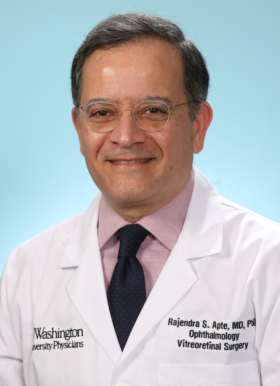
Rajendra S Apte, MD, PhD
Paul A. Cibis Distinguished Professor of Ophthalmology and Visual Sciences; Vice Chair for Innovation and Translation
- Email: apte@nospam.wustl.edu
- Retina
- Lab Website
- Research Profile
-
According to their latest editorial, “Gap Years and the Increasing Opportunity Cost of a Career in Medicine” published in the American Journal of Medicine, the U.S. is projected to be short as many as 86,000 physicians by 2036. While an aging population and rising healthcare needs play a role, another factor is gaining attention. The increasing number of “gap years” students take before medical school or residency could be an issue.
Because medical school has become so competitive, roughly three-quarters of students now take at least one gap year to build their resumes. They do this to gain knowledge through research, clinical experience, or volunteer work. Only about 45% of applicants are accepted into medical school. This trend has surged from 58% in 2014 to 75% in 2024.
These added years of training can delay when future physicians enter the workforce, contributing to fewer practicing doctors at a time when they’re needed most.