Start Your Career in Eye Care
Explore the field of ophthalmology and build the knowledge and skills to support exceptional eye care through the Ophthalmic Personnel Training Program at WashU Medicine.
The WashU Medicine Ophthalmic Personnel Training Program offers paid, entry-level training for individuals interested in exploring a career in eye care. With clinical and nonclinical training tracks, participants gain foundational knowledge, develop valuable skills, and explore opportunities for career growth.
Spring and Fall cohorts
Spring start: January 19 | Fall start: August 24
Open enrollment dates coming soon.
Build Your Foundation in Ophthalmology
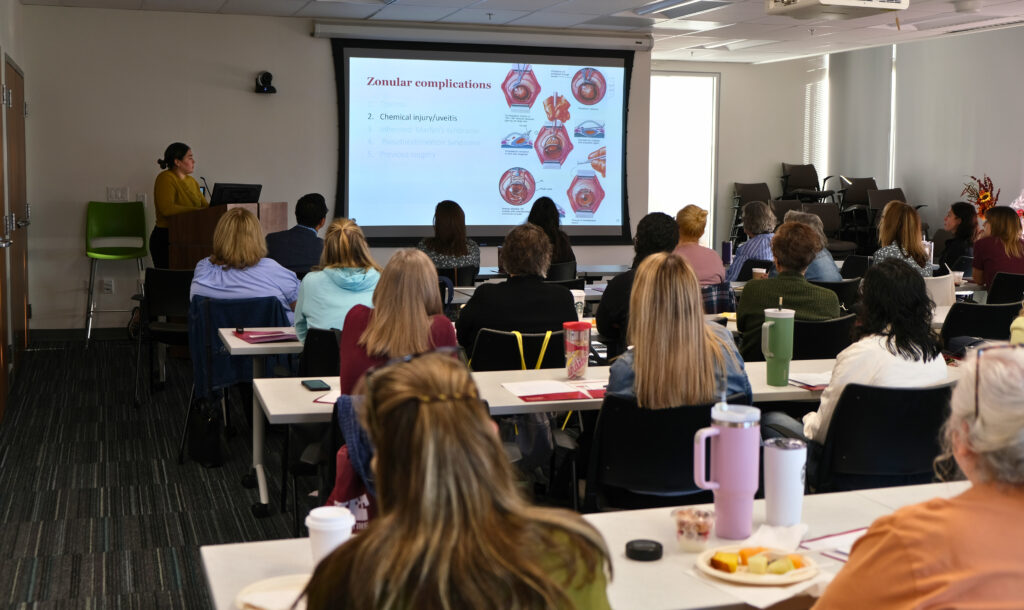
The WashU Medicine Ophthalmic Personnel Training Program provides paid, entry-level training for individuals interested in building a career in eye care. Through classroom instruction, participants gain a broad understanding of ophthalmology, patient care, and the essential knowledge needed to support an eye care team.
Program benefits:
- Paid, entry-level training
- No prior ophthalmology experience required
- Study materials and uniforms provided
- Comprehensive WashU benefits beginning on the first day of training
- Opportunities for continued learning and career development
Accredited Training Program
The WashU Medicine Ophthalmic Personnel Training Program is accredited through the International Council of Accreditation (ICA), affiliated with the International Joint Commission on Allied Health Personnel in Ophthalmology (IJCAHPO).
Accreditation reflects the program’s commitment to established standards for ophthalmic education and training.
Learn more about IJCAHPO accreditation
Explore the Training Tracks
One foundation. Two training pathways.
All participants receive the same classroom instruction across three curriculum areas. The clinical and nonclinical tracks differ in the additional practical training included.
Nonclinical Track
Explore the Field of Ophthalmology
The nonclinical track provides a comprehensive introduction to ophthalmology through classroom instruction. Participants attend all Introduction to Ophthalmology, Basic Skills, and Advanced Skills lectures, gaining an understanding of eye care, patient services, clinical procedures, ophthalmic technology, and the operations that support an eye care practice.
Training includes:
- All Introduction to Ophthalmology lectures
- All Basic Skills lectures
- All Advanced Skills lectures
Outcome: Develop a broad foundation in ophthalmology and an understanding of the knowledge, skills, and responsibilities involved in supporting an eye care practice.
Clinical Track
Develop Hands-On Skills in Eye Care
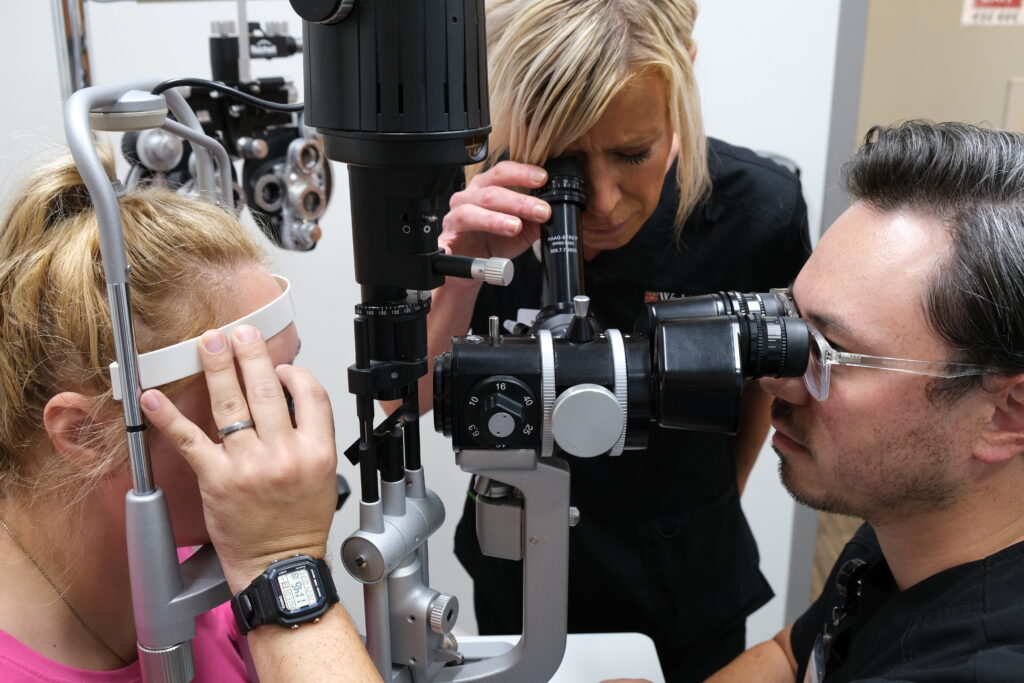
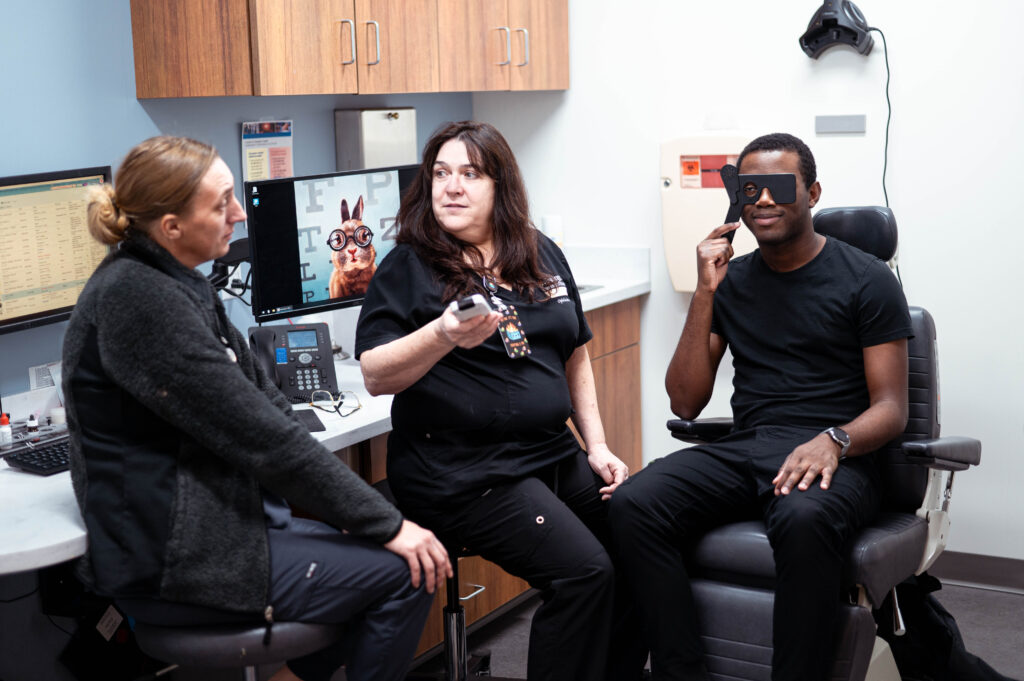
The clinical track includes all classroom instruction provided to nonclinical participants, along with additional hands-on training. Participants attend the Introduction to Ophthalmology, Basic Skills, and Advanced Skills lectures, as well as skills labs and supervised clinic rotations.
Training includes:
- All Introduction to Ophthalmology lectures
- All Basic Skills lectures
- All Advanced Skills lectures
- Hands-on skills labs
- Supervised clinic rotations
Outcome: Build foundational ophthalmic knowledge and practical clinical skills to support physicians and other members of the eye care team in delivering patient care.
Program Curriculum
A Comprehensive Introduction to Ophthalmology
The program’s curriculum is organized into three areas of instruction, building knowledge from the fundamentals of ophthalmic practice to more advanced clinical concepts and techniques.
Overview:
Explore the fundamentals of ophthalmic practice, patient care, and the essential knowledge needed to work effectively as part of an eye care team.
Topics include:
- Clinic and personnel functions in ophthalmic practice
- Medical ethics, regulatory, and legal issues
- Communication, patient education, and counseling
- Ophthalmic patient services and relations, including triage
- Community health eye care
- Safety and infection prevention
- Administrative duties and clinic operations
- Medical terminology
- General and ocular anatomy and physiology
- Pharmacology and microbiology
- Patient history taking
Training emphasizes professional conduct, patient-centered communication, safety, ethical practice, and foundational knowledge of ophthalmic care.
Overview:
Build foundational knowledge of essential ophthalmic procedures, clinical techniques, diagnostic testing, and patient care.
Topics include:
- Vital signs and emergency response
- Visual assessment and documentation
- Visual field assessment
- Pupillary assessment
- Lensometry and keratometry
- Tonometry
- Clinical equipment and supplies maintenance
- Examination of the eye and face
- Clinical optics
- Biometry
- Eye and systemic diseases
Training emphasizes technical knowledge, accurate documentation, patient communication, and professionalism.
Overview:
Expand foundational ophthalmic knowledge and explore specialized skills used in the assessment, diagnosis, and management of eye conditions.
Topics include:
- Low vision
- Supplementary diagnostic tests
- Ophthalmic imaging, including OCT and HRT
- Surgical procedures and sterile technique
- Refractometry, retinoscopy, and refinement
- Ocular motility
- Contact lenses
- Supervision and training support
Training emphasizes advanced technical knowledge, patient safety, accurate documentation, and collaboration within the ophthalmic care team.
How instruction differs by track:
All participants attend the lectures across all three curriculum areas. Clinical track participants also complete hands-on skills labs and supervised clinic rotations, providing opportunities to apply their knowledge in practical settings.
Career Development and Certification
Build Skills for the Future
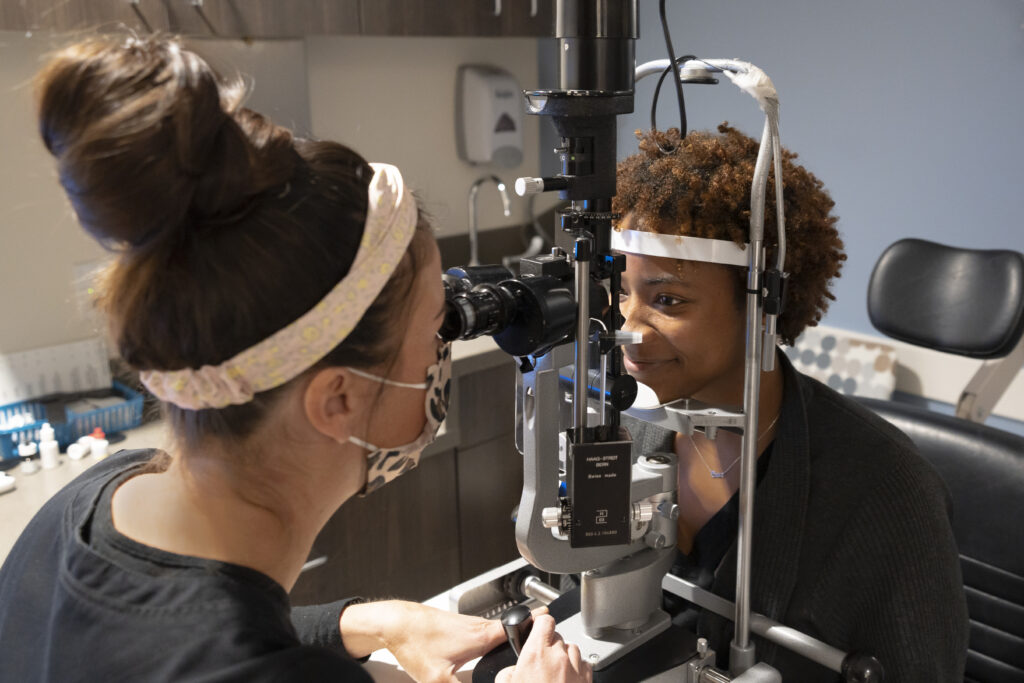
For participants pursuing the clinical pathway, professional certification can provide opportunities to expand their knowledge, demonstrate competency, and advance their careers in ophthalmology.
- Certified Ophthalmic Assistant (COA): Entry-level certification and a foundation for a career in ophthalmology.
- Certified Ophthalmic Technician (COT): Intermediate certification recognizing expanded clinical skills and responsibilities.
- Certified Ophthalmic Medical Technologist (COMT): Advanced certification recognizing expertise and leadership in ophthalmic patient care.
- OSA: Ophthalmic surgical procedures and instrumentation
- CDOS: Ophthalmic ultrasound examinations
- ROUB: Ocular biometry and ultrasound measurements used in surgical planning
- OSC: Documentation of patient encounters and maintenance of medical records under physician supervision
These pathways offer opportunities to develop specialized skills in surgical care, diagnostic imaging, and clinical documentation.
Take the First Step
Interested in joining the Ophthalmic Personnel Training Program? Review the application requirements and prepare to take the next step toward a career in ophthalmology.
Application requirements
- Minimum education requirements: High School Diploma or GED
- Required application materials:
- Resume or CV
- Personal Statement of Purpose (500–750 words) describing your goals for participating in the program and academic background.
- Previous experience: No prior ophthalmology experience required.
- Training track selection: Clinical or nonclinical.
- Additional qualifications: Applicants must pass background check and drug screening. Basic life support certification must be obtained with in one month of hire date.
Enrollment Schedule
Two opportunities to begin each year
The program plans to welcome new participants in the spring and fall.
- Spring cohort: January 19
- Fall cohort: August 24
Open enrollment dates coming soon.
Advancing Eye Care Through Education and Innovation
As world leaders in patient care, teaching and research, we strive to touch lives and preserve and restore vision through innovation and compassionate service.
Our mission is to recruit and train qualified, career-oriented ophthalmic personnel, and advance their clinical skills beyond entry-level competency.
Questions about the program? Contact us.
Medical Director: Praneetha Thulasi, MD
Program Director: Vonda Cross, COMT, CRA
Ophthalmic Training Supervisor | 314-273-5575 | crossv@wustl.edu