Explore Vision Science. Advance Discovery.
A structured research experience for emerging scientists and physician-scientists seeking immersion in a leading vision research program.
WashU Medicine Ophthalmology Global Vision Scholars & Education Program (GVSEP) offers researchers and trainees from around the world the opportunity to engage with a collaborative community advancing the science of vision. Participants gain exposure to innovative research, experienced investigators, and the technologies and approaches being used to better understand, prevent, and treat vision loss.
From fundamental discoveries in the biology of the eye to translational research and emerging technologies, WashU Medicine Ophthalmology provides a rich environment for trainees interested in the future of vision science.
About this track
Vision research brings together diverse disciplines, from cell biology and neuroscience to engineering, genetics, computational science, and clinical investigation. The research trainee track provides an opportunity to experience this interdisciplinary environment and develop connections with investigators working across the spectrum of vision science.
Participants are matched with faculty and research teams based on their research interests, experience, and available opportunities. Depending on their placement, trainees may spend time in research laboratories, attend laboratory meetings and seminars, observe ongoing experiments and studies, and engage with faculty, postdoctoral researchers, graduate students, and other members of the research community.
The experience is designed to provide meaningful exposure to the research process, foster scientific collaboration, and help trainees develop a deeper understanding of the research taking place at WashU Medicine Ophthalmology.
Specific activities and opportunities vary based on the trainee’s background, research interests, host faculty, project availability, and applicable institutional requirements.
Program details
- Duration: Choose a program that works for you. Options include short-term (5–10 days), long-term (2–3 weeks), or extended programs, based on availability
- Start Dates: Rolling, based on availability
- Schedule: Full-time, Monday–Friday
- Research Focus: Vision science and ophthalmic research
- Research Areas: Basic, translational, computational, and clinical research
- Compensation: Unpaid research experience
What you’ll do
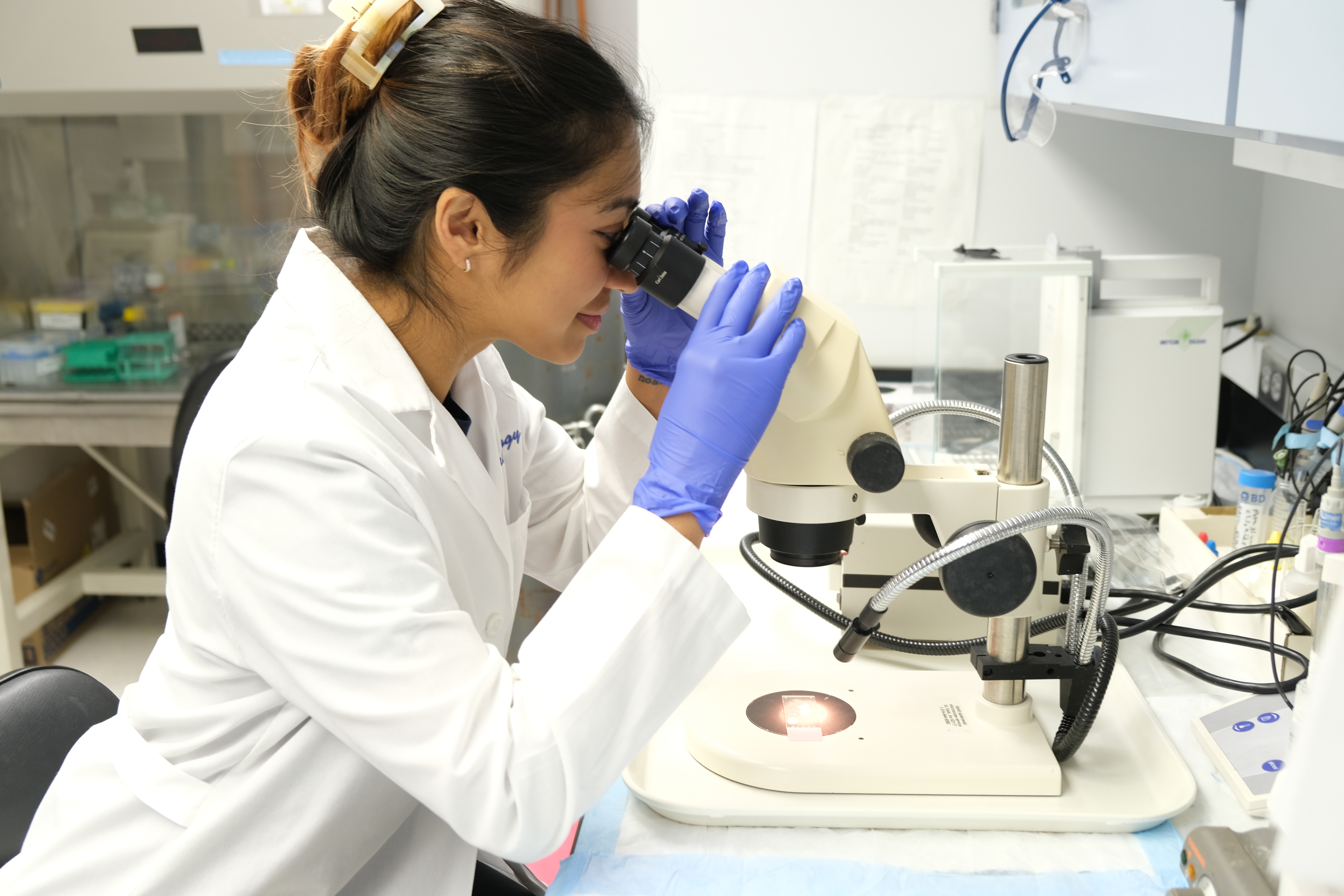
Vision research immersion
Gain exposure to active research programs investigating the biology of vision and the mechanisms underlying eye disease and vision loss. Depending on your interests and placement, you may observe laboratory techniques, experimental approaches, imaging technologies, data analysis, and other research methods.
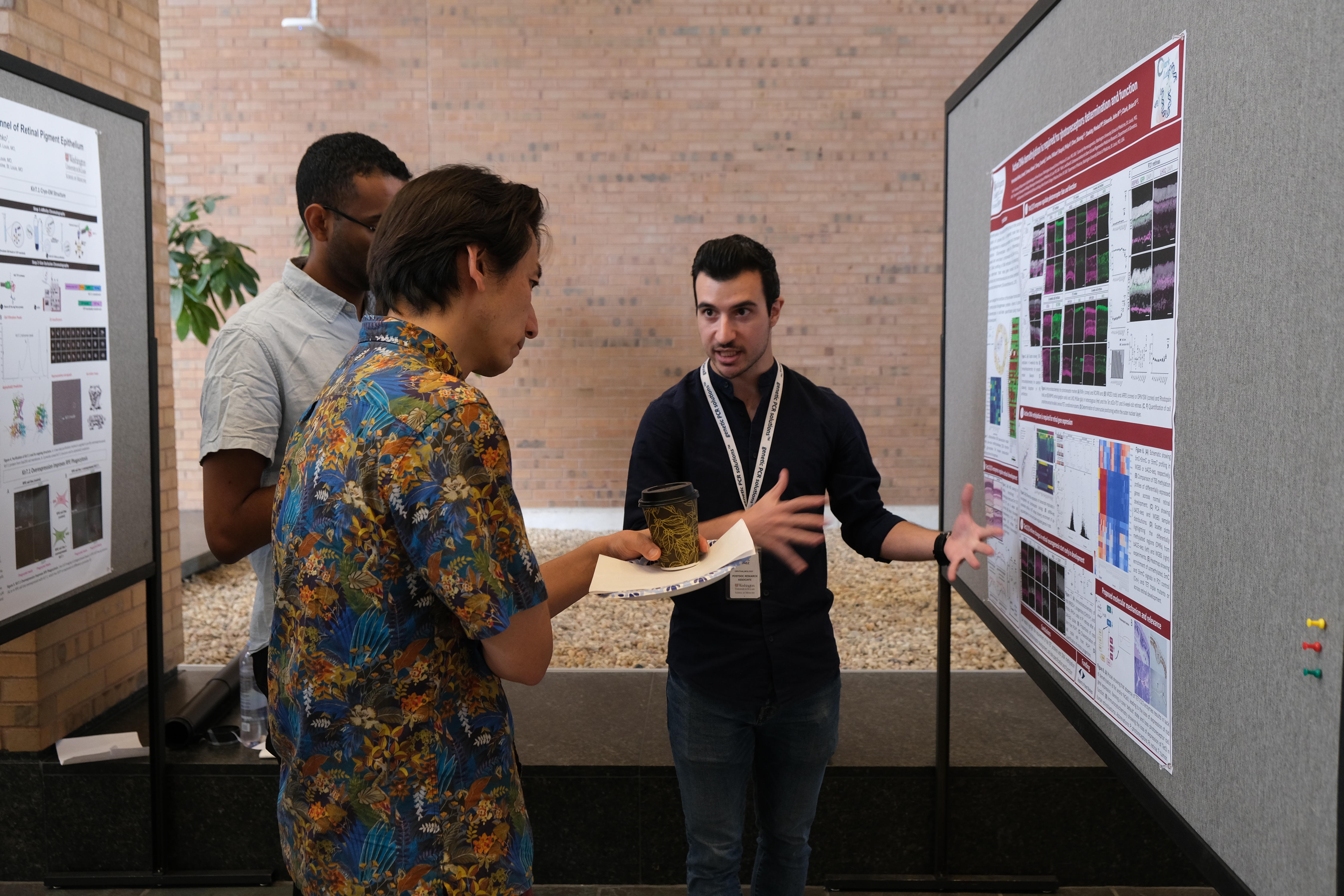
Faculty & research mentorship
Connect with WashU Medicine Ophthalmology investigators whose research aligns with your interests and career goals. Mentorship may include discussions about research questions, experimental design, scientific methods, data interpretation, publishing, grant development, and careers in vision science.

Research project experience
Depending on your prior experience and available opportunities, you may have the opportunity to contribute to an active vision research project. Activities may include laboratory research, data analysis, computational work, literature review, clinical research activities, or other project-specific work.
Participation in a research project is not guaranteed and is determined by the host faculty member and research team.

Seminars, conferences & research meetings
Participate in research seminars, laboratory meetings, journal clubs, grand rounds, visiting professor lectures, and other educational activities. These experiences provide opportunities to engage with investigators and trainees while learning how new discoveries are evaluated, communicated, and translated into advances in vision care.
Research areas
WashU Medicine Ophthalmology researchers investigate fundamental questions about vision, the eye, and the mechanisms that lead to disease and vision loss. Research experiences may include:
- Retinal biology & disease — retinal development, degeneration, regeneration, age-related macular degeneration, diabetic retinopathy, and inherited retinal diseases
- Glaucoma & optic nerve research — mechanisms of neurodegeneration, optic nerve injury, neuroprotection, biomarkers, and disease progression
- Cornea & ocular surface research — corneal biology, wound healing, transplantation, ocular surface disease, and regenerative medicine
- Neuroscience & visual systems — neural circuits, visual processing, optic nerve biology, neurodegeneration, and mechanisms of vision loss
- Genetics & genomics — genetic causes of eye disease, disease mechanisms, biomarkers, and therapeutic targets
- Immunology & inflammation — mechanisms of ocular inflammation, immune-mediated disease, and novel therapeutic approaches
- Ocular oncology — tumor biology, mechanisms of ocular cancers, and development of new diagnostic and therapeutic approaches
- Artificial intelligence & computational vision science — medical imaging, machine learning, computational modeling, and data-driven approaches to understanding and diagnosing eye disease
- Translational & clinical research — biomarkers, clinical studies, therapeutic development, patient outcomes, and translating laboratory discoveries into new approaches to patient care
What you’ll receive
- Certificate of completion from the WashU Medicine John F. Hardesty, MD Department of Ophthalmology & Visual Sciences
- Research mentorship and connections — opportunities to build relationships with investigators and research teams aligned with your scientific interests
- Vision research experience — exposure to active research programs and the scientific process within an academic medical center
- Potential project contribution — trainees who make meaningful contributions to an active research project may be considered for opportunities such as co-authorship, abstract submission, or conference presentation, based on contribution and faculty discretion
- Academic and professional development — exposure to seminars, research meetings, and a multidisciplinary community of vision scientists
Who can apply
We welcome applications from emerging researchers and physician-scientists with an interest in vision science, including:
- MD/PhD students with an interest in ophthalmology, neuroscience, vision science, or related fields
- Ophthalmology residents and fellows pursuing research experience
- Postdoctoral researchers seeking to expand their experience or develop collaborations in vision science
- Other qualified research trainees with relevant academic or scientific backgrounds
Applicants should demonstrate a strong interest in vision research and meet applicable institutional requirements.
Eligibility & requirements
- Current enrollment in a relevant graduate, medical, residency, fellowship, or postdoctoral training program
- Documentation of current training status
- Good academic or research standing
- Approval from the home institution, when applicable
- Demonstrated interest or experience in vision science, ophthalmology, neuroscience, or a related research field
- Demonstrated English language proficiency — assessed through a video interview with our team as part of the application process
How to apply
Applications are reviewed on a rolling basis. We encourage submissions 4 to 6 months in advance of your preferred start date, as this is a highly competitive and selective program. Spots are limited.
Required materials
- Curriculum vitae (CV)
- Current academic or training record
- Proof of current enrollment or training status
- Personal Statement of Purpose (500–750 words) describing your goals for participating in the program and research background
- One statement of support from a home program director, preceptor, or faculty mentor
- Photograph (headshot for ID badge)
Apply today!
Note: All requirements must be submitted in English. Only official (e.g., notarized) translations are accepted.
Additional documentation and materials may be required based on individual application.
FAQ
To participate in our program, all visitors must hold a valid US visa. We provide guidance on which visa type is appropriate for your visit and issue an invitation letter to support your application. All visitors are responsible for filing their own visa application and covering any associated costs.
For research applicants participating in an extended program (up to one year), temporary exchange visitor visa sponsorship may be available on a case-by-case basis. Applicants interested in an extended research program should contact our team directly to discuss exchange visitor eligibility.
Housing is not provided. However, our team can connect you with short-term accommodation options.
Participants may explore a range of off-campus housing options, including WashU-managed apartments, apartment referral services, and summer housing. Depending on the length of your stay, temporary housing may also be available at The Core Apartment Residences.
This will depend on your home program’s individual policies. We recommend checking with your program before applying. All participants receive a certificate of completion documenting their time in the program.
Depending on the length of your visit and faculty availability, you may be able to rotate through multiple research areas.
Faculty placement is based on your subspecialty of interest and availability. View our full faculty list to see the department’s clinical and research team.