Elevate Your Clinical Training. Broaden Your Perspective.
A structured observership experience for residents and fellows at one of the nation’s leading ophthalmology programs.
Training in ophthalmology demands technical precision, subspecialty depth, an understanding of how the eye connects to the rest of the body, and an appreciation of how the world’s leading programs approach patient care.
The WashU Medicine Ophthalmology Global Vision Scholars & Education Program (GVSEP) offers residents and fellows from around the world the opportunity to observe and learn within our department — engaging with complex cases, experienced faculty, and a culture of rigorous academic medicine that has shaped generations of ophthalmologists.
About this track
Clinical training in ophthalmology is shaped by exposure to diverse patient populations, complex pathology, and evolving surgical techniques. The clinical trainee track provides focused access to all three within a collaborative academic setting.
Participants spend dedicated time within subspecialty clinics, operating rooms, and educational conferences, observing how our faculty approach diagnosis, management, and surgical care. Trainees are integrated into the daily activities of the department, allowing for direct engagement with residents, fellows, and attending physicians.
The experience is observational and designed to provide insight into clinical practice patterns, academic workflows, and subspecialty expertise. Our vision is for these interactions to lead to future collaborations between visiting scholars and WashU Ophthalmology.
Note: No direct patient care is provided. Participation is strictly observational.
Program details
- Duration: Choose a program that works for you. Options include short-term (5–10 days), long-term (2–3 weeks), or extended programs, based on availability
- Start Dates: Rolling, based on availability
- Schedule: Full-time, Monday–Friday
- Subspecialties: Retina, Glaucoma, Cornea & External Disease, Neuro-ophthalmology, Pediatric Ophthalmology, Oculoplastics, Ocular Oncology, Comprehensive Ophthalmology
- Compensation: Unpaid observership
What you’ll do

Subspecialty clinic observation
You’ll observe patient encounters in your chosen subspecialty alongside WashU Medicine Ophthalmology attendings, residents, and fellows. Our faculty will share their clinical reasoning, discuss diagnostic approaches, and engage with you as a peer in training.
Surgical observation
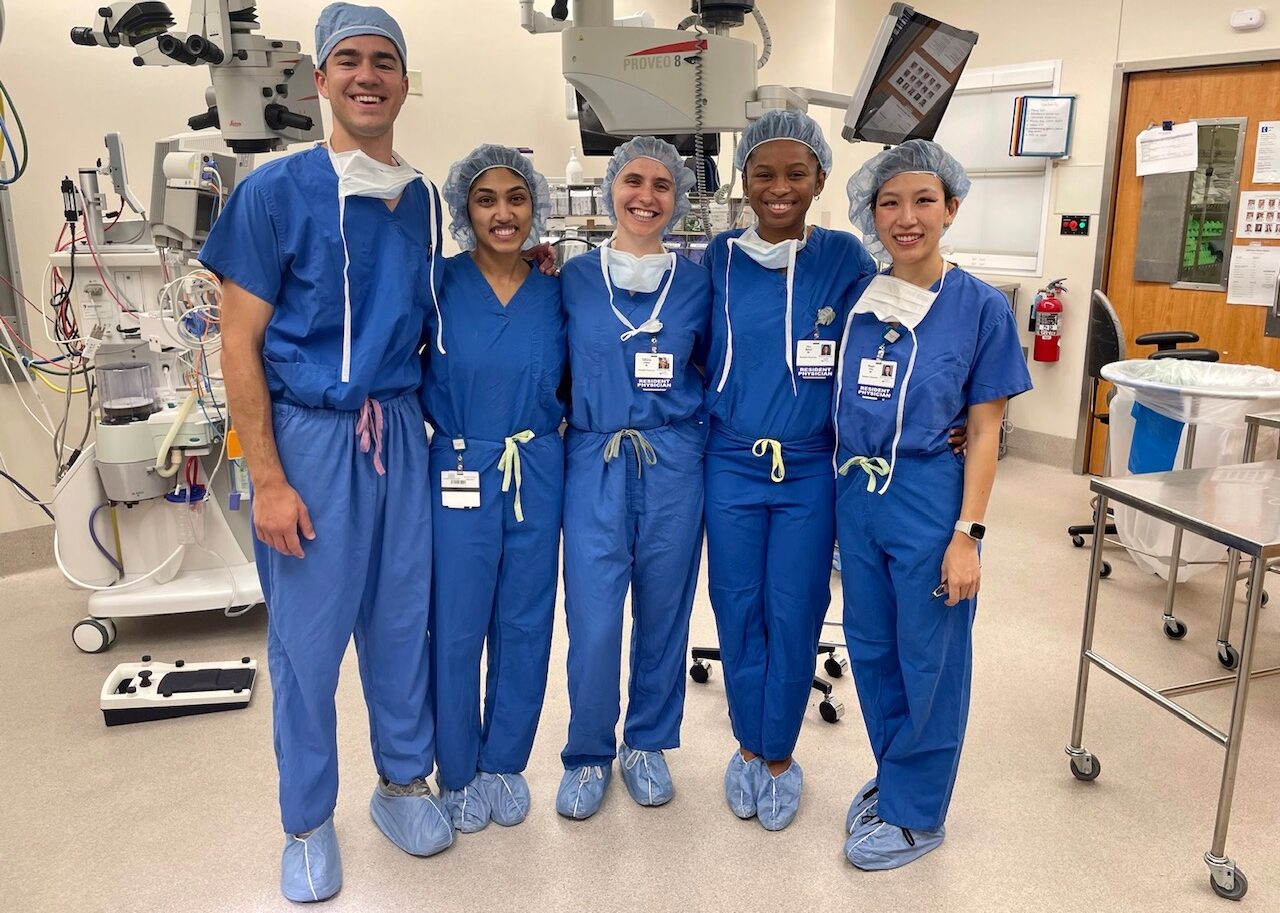
WashU Medicine ophthalmologists perform a high volume of complex surgical cases across all subspecialties. Clinical trainees have the opportunity to observe in the operating room, including advanced procedures not commonly available at all training programs.
Clinical research
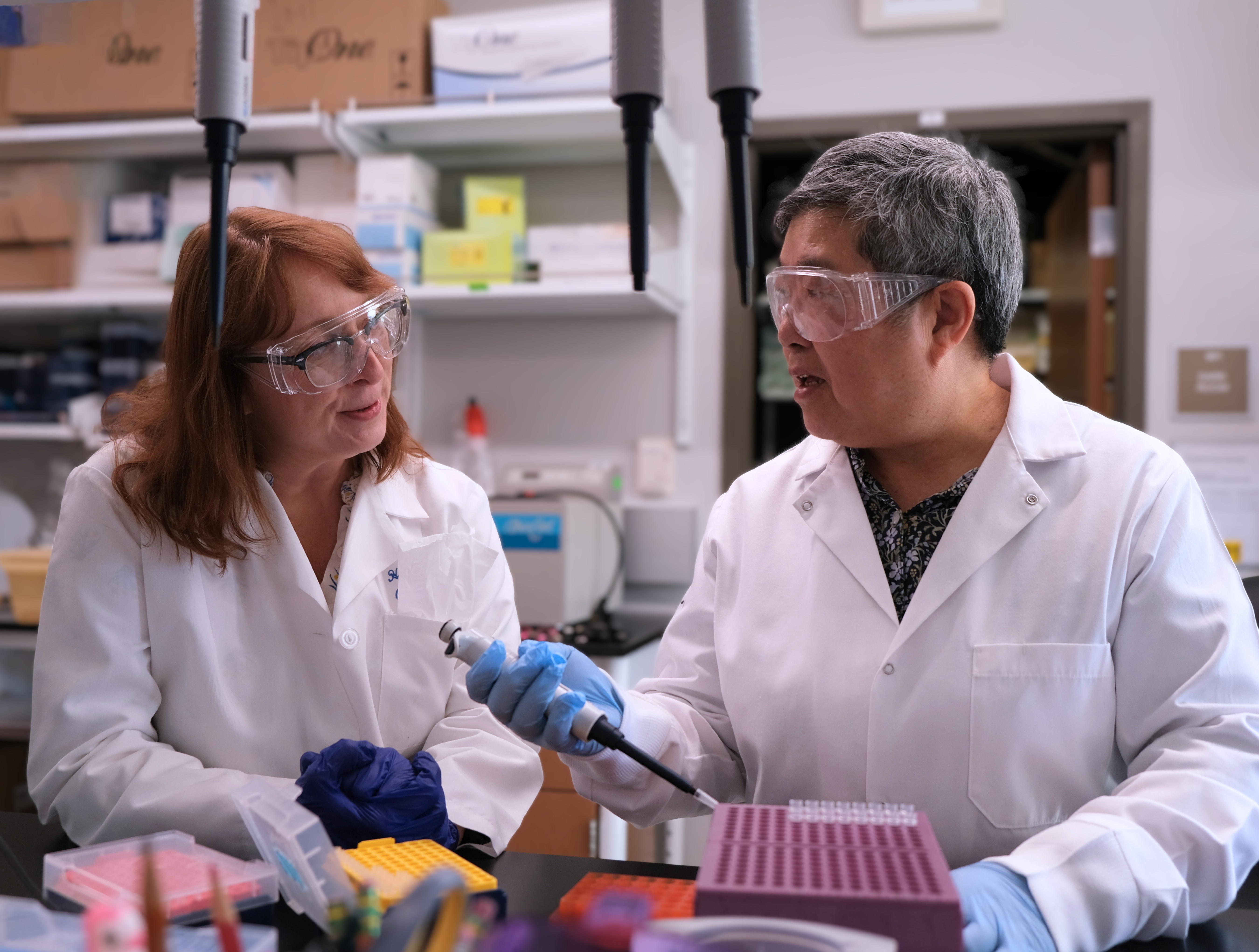
Trainees with an interest in clinical research may be matched with faculty conducting active studies. Opportunities may include chart review, outcomes research, or participation in prospective study protocols.

Conferences & didactics
Participants attend resident and fellow teaching conferences, grand rounds, journal clubs, morbidity and mortality conferences, and visiting professor lectures. These sessions offer a window into how WashU Medicine Ophthalmology approaches education, quality improvement, and the integration of research into clinical practice.
Available Subspecialties
Participants may request placement in one or more of the following subspecialty areas:
- Retina & Vitreous — medical and surgical retina, including AMD, diabetic retinopathy, retinal detachment, and inherited retinal diseases
- Glaucoma — medical management, laser, and surgical treatment; a high-volume glaucoma practice with significant surgical complexity
- Cornea & External Disease — keratoconus, corneal transplantation (DSAEK, DMEK, PK), ocular surface disease, and refractive surgery
- Neuro-ophthalmology — optic nerve disorders, ocular motility, and neurological conditions affecting vision
- Pediatric Ophthalmology & Strabismus — pediatric retina, strabismus surgery, and congenital conditions
- Oculofacial Plastic & Reconstructive Surgery — eyelid, lacrimal, orbital, and facial reconstructive surgery
- Ocular Oncology — uveal melanoma, ocular adnexal tumors, and retinoblastoma
- Comprehensive Ophthalmology — general ophthalmic care with a broad case mix
- Uveitis — ocular inflammation diagnosis, scleritis, orbital inflammation, keratitis, conjunctivitis, autoimmune diseases, and multidisciplinary personalized treatment plan
What you’ll receive
- Certificate of completion from the WashU Medicine John F. Hardesty, MD Department of Ophthalmology & Visual Sciences
- Ongoing faculty relationship — many participants maintain lasting connections with WashU Medicine Ophthalmology faculty after the program concludes
- Clinical research opportunity — trainees who contribute meaningfully to an active project may be considered for co-authorship or conference presentation (based on contribution and faculty discretion)
Eligibility & requirements
We welcome applications from residents and fellows who meet the following criteria:
- Current enrollment in an ophthalmology residency or fellowship program
- Valid medical degree and documentation of training status
- Must be in good academic standing and approved by the home institution for the away rotation
- Demonstrated English language proficiency — assessed through a video interview with our team as part of the application process
How to apply
Applications are reviewed on a rolling basis. We encourage submissions 4 to 6 months in advance of your preferred start date, as this is a highly competitive and selective program. Spots are limited.
Required materials
- Curriculum vitae (CV)
- Current medical school transcript
- Proof of medical degree and documentation of training status
- Personal Statement of Purpose (500–750 words) describing your goals for participating in the program and academic background
- One statement of support from a home program director, preceptor, or faculty mentor
- Photograph (headshot for ID badge)
Apply today!
Note: All requirements must be submitted in English. Only official (e.g., notarized) translations are accepted.
Additional documentation, like proof of liability coverage, may be required based on the duration of the program and individual application.
FAQ
To participate in our program, all visitors must hold a valid US visa. We provide guidance on which visa type is appropriate for your visit and issue an invitation letter to support your application. All visitors are responsible for filing their own visa application and covering any associated costs.
Housing is not provided. However, our team can connect you with short-term accommodation options.
Participants may explore a range of off-campus housing options, including WashU-managed apartments, apartment referral services, and summer housing. Depending on the length of your stay, temporary housing may also be available at The Core Apartment Residences.
This will depend on your home program’s individual policies.
We recommend checking with your program before applying. All participants receive a certificate of completion documenting their time in the program.
Yes. OR observation is a standard part of the clinical trainee experience, subject to scheduling and faculty availability. Note that participation is strictly observational.
Yes, for longer-duration participants. Multi-subspecialty placements are arranged based on duration, availability, and participant goals.
Absolutely. Fellows are welcome, and the program can be tailored to provide subspecialty depth appropriate to your advanced training level.
Faculty placement is based on your subspecialty of interest and availability. View our full faculty list to see the department’s clinical and research team.