Stephen Wexler, MD, explains limits of laser vision correction and when alternative options may be recommended
Patients often ask how high a prescription can be safely treated with LASIK or PRK. In this video, Stephen Wexler, MD, refractive surgeon with the WashU Medicine John F. Hardesty, MD Department of Ophthalmology & Visual Sciences, explains the factors that determine whether someone with a high prescription is a good candidate for laser vision correction.
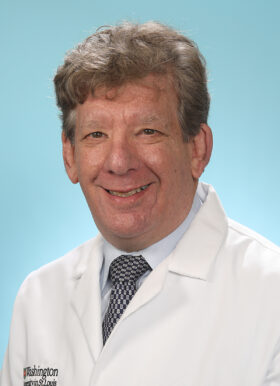
Stephen A. Wexler, MD
Professor of Ophthalmology and Visual Sciences
- Email: swexler@nospam.wustl.edu
Medical Director WashU Medicine LASIK Surgery Center
While the excimer laser used in LASIK and PRK is FDA-approved to treat up to –14.00 diopters of nearsightedness, most refractive surgeons—including Dr. Wexler—take a more conservative and safety-focused approach. In clinical practice, LASIK is typically performed up to around –9.00 diopters, and only when the cornea is healthy, thick enough, and meets all safety parameters.
For patients with prescriptions higher than that range, other refractive surgery options may provide better outcomes. These alternatives include phakic intraocular lenses (ICLs) or, in certain cases, refractive lens exchange. Wexler notes that individuals with extremely high myopia may also have increased risk for retinal issues, which must be considered when determining the safest surgical pathway.
“We really don’t go much above minus nine for LASIK or PRK. For higher prescriptions, options like a phakic IOL or refractive lens exchange can be a better choice,” Dr. Wexler explains.
About WashU Medicine
WashU Medicine is a global leader in academic medicine, including biomedical research, patient care and educational programs with 2,900 faculty. Its National Institutes of Health (NIH) research funding portfolio is the second largest among U.S. medical schools and has grown 56% in the last seven years. Together with institutional investment, WashU Medicine commits well over $1 billion annually to basic and clinical research innovation and training. Its faculty practice is consistently within the top five in the country, with more than 1,900 faculty physicians practicing at 130 locations and who are also the medical staffs of Barnes-Jewish and St. Louis Children’s hospitals of BJC HealthCare. WashU Medicine has a storied history in MD/PhD training, recently dedicated $100 million to scholarships and curriculum renewal for its medical students, and is home to top-notch training programs in every medical subspecialty as well as physical therapy, occupational therapy, and audiology and communications sciences.