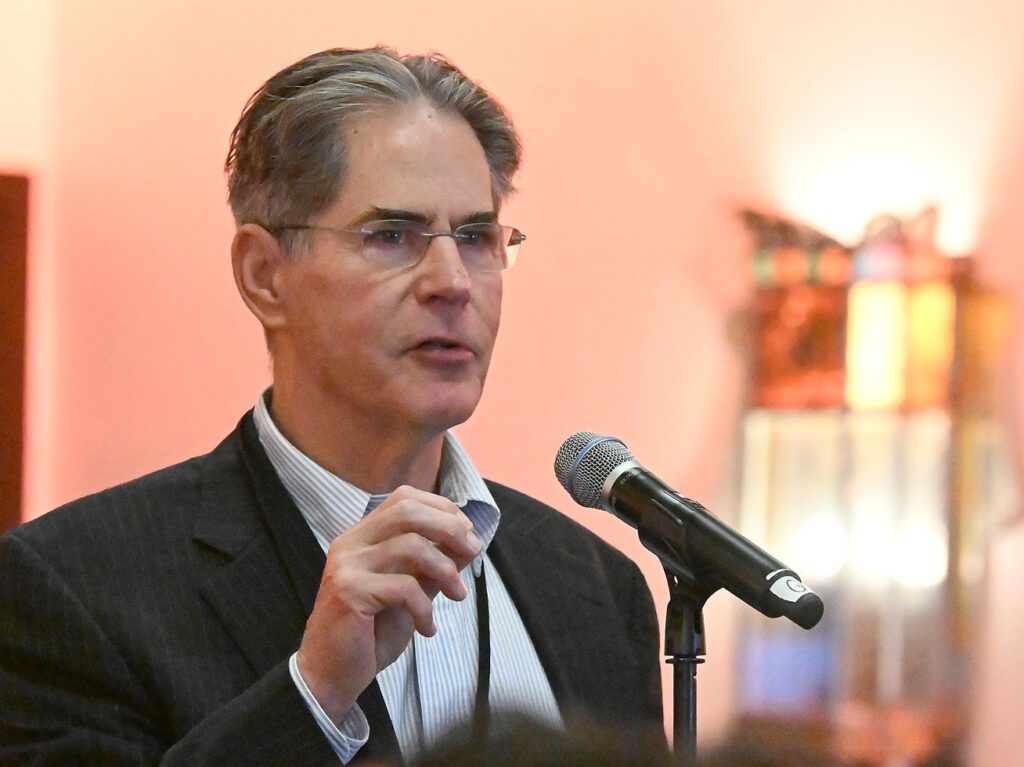
Lawrence Tychsen, MD, of the WashU Medicine John F. Hardesty, MD Department of Ophthalmology & Visual Sciences, recently presented his research at the annual meeting of the American Ophthalmological Society (AOS) in Santa Fe, New Mexico. His presentation highlighted how refractive surgery can improve vision and quality of life for children with neurobehavioral disorders who are unable to successfully wear glasses or contact lenses.
Children with neurobehavioral disorders frequently have refractive errors, such as nearsightedness, farsightedness, or astigmatism. While these vision problems are often correctable with glasses or contact lenses, many children struggle to tolerate or consistently wear them, leaving their vision blurred. This reduced visual clarity can worsen behavioral challenges and make everyday activities more difficult.
Tychsen’s presentation explored how refractive surgery, including laser vision correction and lens-based procedures, can restore clear vision for carefully selected pediatric patients. Improving visual function may not only enhance a child’s ability to see the world more clearly but also support better participation in learning, communication, and daily activities.
“Restoring normal vision to children with special needs can improve social behaviors, motor skills, and educational tasks, enhancing quality of life while also reducing the burden on caregivers.”
Lawrence Tychsen, MD
By expanding access to vision correction for children who cannot benefit from traditional glasses or contact lenses, this work highlights the potential for refractive surgery to improve both visual outcomes and overall well-being for patients and their families.