From May 3–7, 2026, researchers and trainees from the John F. Hardesty, MD Department of Ophthalmology & Visual Sciences at WashU Medicine participated in the annual meeting of the Association for Research in Vision and Ophthalmology in Denver, Colorado. As the premier international gathering for eye and vision science, ARVO brings together investigators from around the world to share discoveries that are shaping the future of ophthalmology and vision research.
Throughout the meeting, WashU Medicine faculty, fellows, trainees, and research staff presented innovative work spanning retinal disease, glaucoma, imaging technologies, artificial intelligence, ocular genetics, translational science, and neuroprotection. These presentations reflected the department’s continued commitment to advancing discoveries that improve patient care and preserve vision worldwide.
Celebrating Excellence
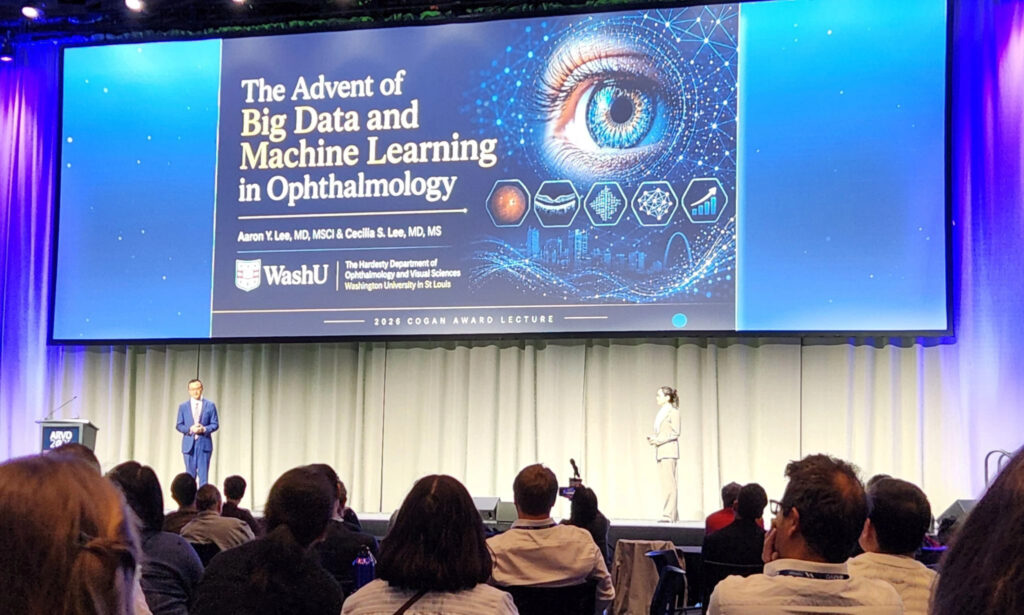
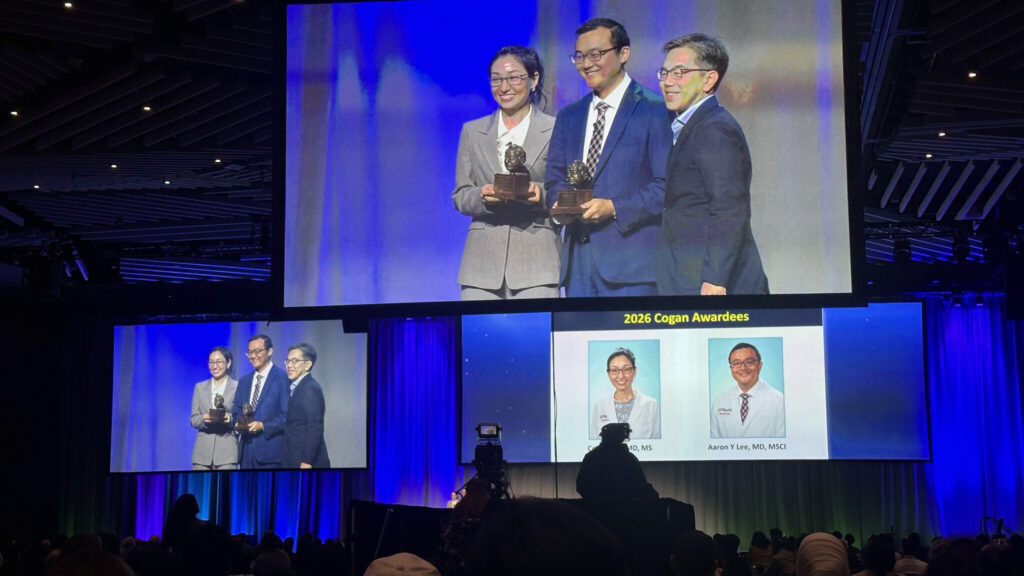
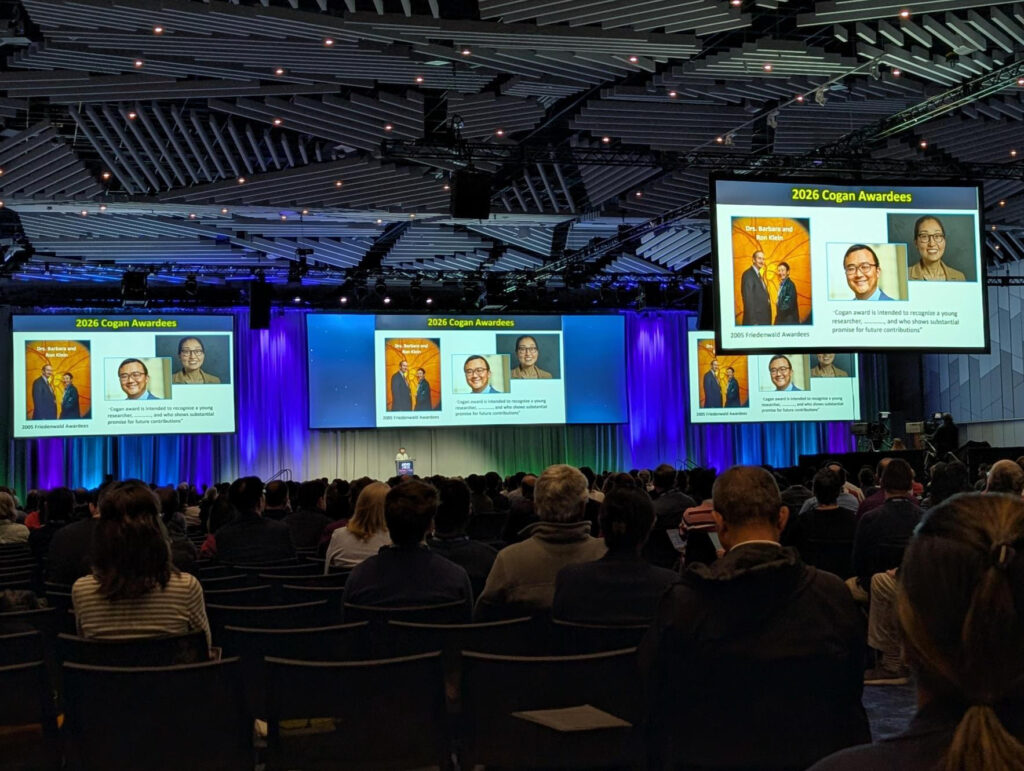
A major highlight of ARVO 2026 was the recognition of Aaron Y. Lee, MD, MSCI and Cecilia S. Lee, MD, MS with the prestigious ARVO Cogan Award. The award honors outstanding achievements by young investigators whose work has significantly advanced vision science and ophthalmology research.
During the meeting, the Lees delivered the Cogan Award Lecture titled “The Advent of Big Data and Machine Learning in Ophthalmology,” highlighting the growing impact of artificial intelligence, large-scale datasets, and computational innovation in improving diagnosis, disease monitoring, and patient outcomes in ophthalmology.
“Receiving the ARVO Cogan Award is an incredible honor and reflects the collaborative spirit of vision science research. We are grateful to work alongside outstanding colleagues, trainees, and collaborators who continue pushing innovation forward to improve patient care.” — Aaron Y. Lee, MD, MSCI and Cecilia S. Lee, MD, MS
WashU Medicine’s Contributions
This year’s presentations highlighted the breadth of research taking place across the department, including studies focused on retinal degeneration, glaucoma progression, AI-assisted imaging analysis, chromatin remodeling, geographic atrophy, and emerging therapeutic strategies.
Notable presentations included:
- Phil Williams, PhD — Visualizing retinal ganglion cell metabolism in live mice in health and degeneration
- Phil Ruzycki, PhD — Loss of variant histone H3.3 from retinal progenitors blocks post mitotic enhancer remodeling and acquisition of cell fate
- Luke Reilly — Age-related macular degeneration severity and risk of Alzheimer’s disease in older adults
- Sharon Sabapathypillai, MD, MS — On-Road Evaluation of Adults with Open Angle Glaucoma
- Rajendra Apte, MD, PhD — Accelerating solutions through collaborative research funding: The RPB/AMDF Catalyst Awards for Innovative Approaches for AMD
- Carla J. Siegfried, MD — Cellular Senescence and Oxidative Stress in Human Trabecular Meshwork
- Ning Shen, PhD — A genome-wide in vivo CRISPR screen identifies neuroprotective strategies in the mouse and human retina
- LinYing Zhang — FlioNet: Predicting Hemoglobin A1c with Fluorescence Lifetime Imaging Ophthalmoscopy from AI-READI Data
- Zhipeng (Edward) Ding – mTORC1 Signaling Regulates Growth and Integrity of Mammalian Lens


Advancing Vision Science
Participation at ARVO 2026 showcased the continued momentum of WashU Medicine Ophthalmology research and the department’s collaborative approach to advancing discoveries from the laboratory to the clinic. By integrating basic science, clinical research, imaging innovation, and artificial intelligence, WashU Medicine researchers are helping shape the future of vision care and expanding opportunities for earlier diagnosis, personalized treatment, and improved outcomes for patients with eye disease.
You can view the original preview of presenters here: WashU Medicine Researchers to Present at ARVO 2026