WashU Medicine physicians describe a rare cause of secondary glaucoma tied to amyloid protein deposits inside the eye
Physicians from the WashU Medicine John F. Hardesty, MD Department of Ophthalmology & Visual Sciences recently published a new case report describing a rare cause of glaucoma that was difficult to diagnose using standard clinical exams. The article, authored by Joseph B. Lin, MD, James C. Liu, MD, Rajendra S. Apte, MD, PhD, and George J. Harocopos, MD, appears in the American Journal of Ophthalmology Case Reports.
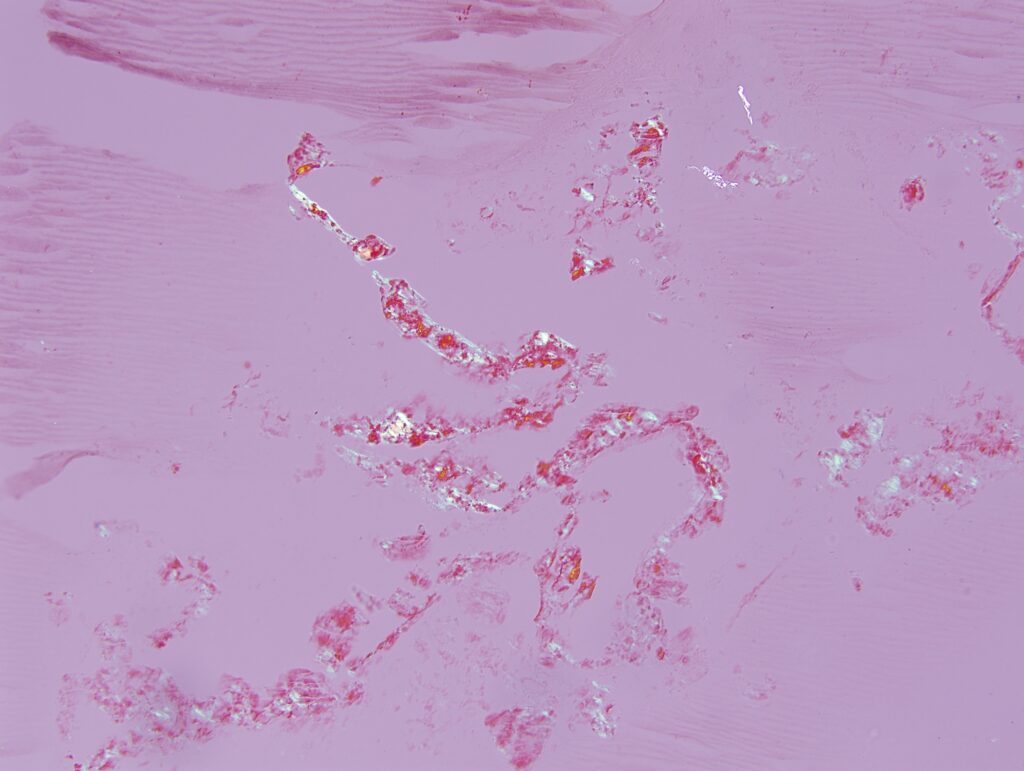
Understanding a Rare Cause of Glaucoma
The team describes a patient whose glaucoma was unusually resistant to typical treatments and was ultimately found to be caused by amyloid protein deposits inside the eye. Amyloid is an abnormal protein that can accumulate in tissues and interfere with normal function. In this case, the buildup occurred in the vitreous gel of the eye and led to elevated eye pressure, even though the front of the eye appeared normal during routine examination.
Because standard glaucoma therapies were ineffective, surgery was required to determine the underlying cause. Pathologic testing revealed a rare hereditary form of amyloidosis, helping explain why traditional treatments had failed and guiding future care for the patient.
“We’re taught that when you hear hoofbeats, you should think horses, not zebras—but this case shows that when the common explanation doesn’t fit, it’s important to consider rarer causes.”
Joseph Lin, MD, PhD
Why This Research Matters
While most cases of glaucoma are caused by more common mechanisms, this report highlights the importance of considering unusual diagnoses when patients do not respond to expected treatments. Early recognition of rare causes such as intraocular amyloidosis may help clinicians pursue timely surgical evaluation and avoid prolonged disease progression.
The authors hope this case increases awareness among eye care providers and encourages consideration of systemic or genetic conditions when glaucoma behaves atypically.
Related Publications and Resources
About WashU Medicine
WashU Medicine is a global leader in academic medicine, including biomedical research, patient care and educational programs with 2,900 faculty. Its National Institutes of Health (NIH) research funding portfolio is the second largest among U.S. medical schools and has grown 56% in the last seven years. Together with institutional investment, WashU Medicine commits well over $1 billion annually to basic and clinical research innovation and training. Its faculty practice is consistently within the top five in the country, with more than 1,900 faculty physicians practicing at 130 locations and who are also the medical staffs of Barnes-Jewish and St. Louis Children’s hospitals of BJC HealthCare. WashU Medicine has a storied history in MD/PhD training, recently dedicated $100 million to scholarships and curriculum renewal for its medical students, and is home to top-notch training programs in every medical subspecialty as well as physical therapy, occupational therapy, and audiology and communications sciences.